
A Story of Courage: Building a Purpose-Led Catering Business as a Ukrainian Refugee in London (Part 2)
From pop-up suppers for twelve to a team-led operation serving hundreds, discover how Anna built a business that created community, preserved heritage, and projected more than £420,000 a year by the end of Year 2.
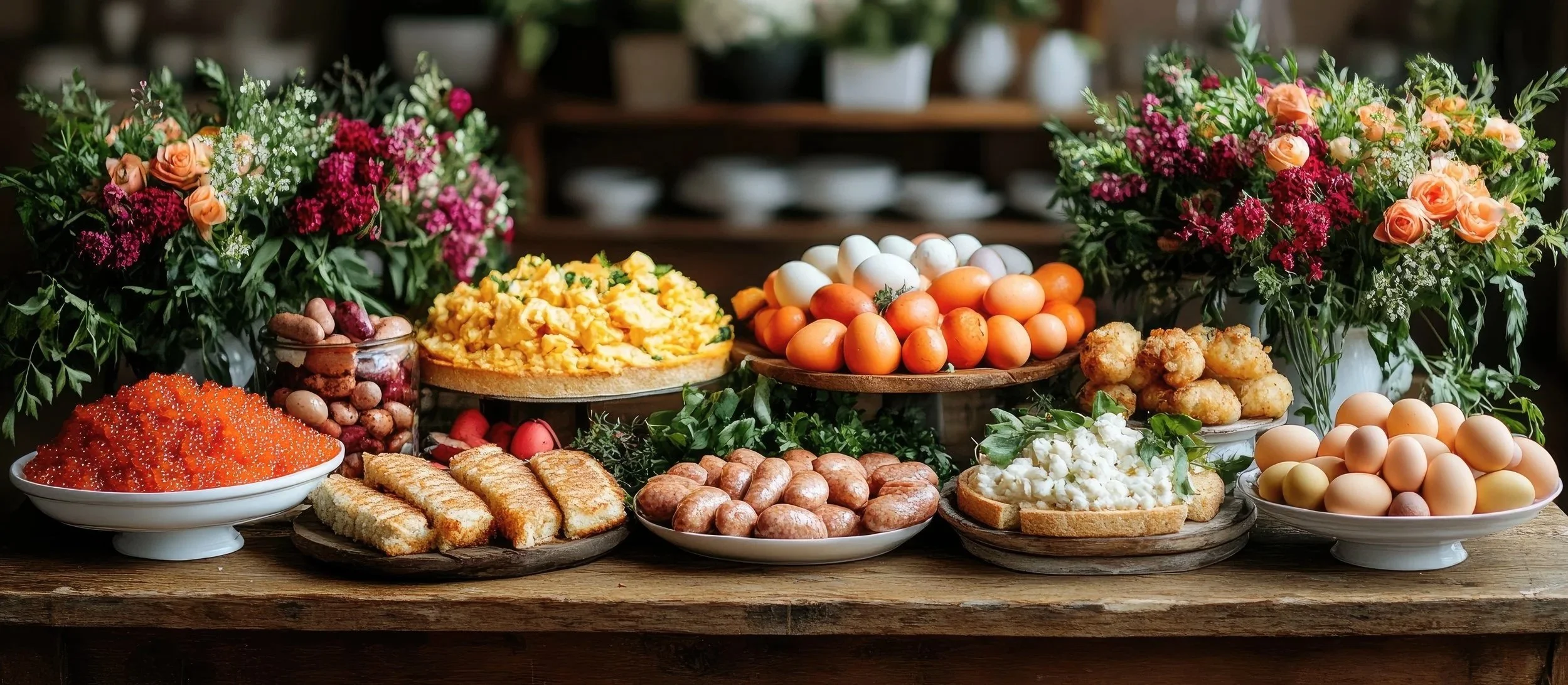
Where We Left Off
If you haven't read Part 1 of Anna's story, you'll find it here. But here's the short version.
Anna arrived in London in late March 2022 through the Homes for Ukraine scheme, having left behind a successful catering business in Ukraine. She stayed with a friend in Islington and didn't know how long she'd be staying. She desperately wanted to go home.
I worked with Anna pro bono for a year to help her build a boutique catering service drawing on culinary traditions from across Eastern Europe - Georgian, Ukrainian, Estonian - with a particular inspiration from the Carpathian mountains. She started with pop-up suppers for twelve people at my friend's house, and by the end of that first year she was running the equivalent of three pop-ups a week, employing other displaced Ukrainian women, and funding meals for people experiencing food insecurity with every booking.
By the end of Year 1, Anna had a business generating around £2,000 a week - before events and parties - built entirely on word of mouth, a growing reputation, and food that made people feel something.
Year 2 was about something different. Anna had accepted that she wasn't going to be returning to Ukraine any time soon. The question shifted from "how do I sustain myself while I wait to go home?" to "how do I build something that can grow?"
Finding the Right Spaces
One of the first things we worked on was the practical challenge of space. Anna had outgrown her friend's kitchen. But she wasn't ready - financially or emotionally - to commit to a permanent commercial kitchen. She needed a middle step.
We found it in pop-up residencies. Anna partnered with two cafés that were closed in the evenings, using their kitchens and dining spaces for regular pop-up suppers. This gave her consistent venues without the overhead of a permanent lease, and it gave the café owners additional income from space that would otherwise sit empty. Alongside the residencies, she continued with a monthly event at my friend's house and pop-ups at other locations, keeping the variety and flexibility that had worked so well in Year 1.
For larger events and weddings, she hired a commercial kitchen on a day rate. This was the right model for this stage. It meant she could take on bigger bookings without carrying fixed costs she couldn't yet afford.
By the end of Year 2, the volume of work made a permanent space necessary. But by then, Anna had the revenue to support it.
Building the Team
Anna's team grew steadily through the year, and how she built it says a lot about who she is.
Her early hires were Ukrainian women from her networks - both in London and at home - employed on zero-hour contracts because flexibility mattered on both sides. As the pop-up residencies created more predictable work, she was able to offer contracts for the duration of each residency. Over time, as demand increased, the team moved to a mixture of zero-hour, temporary, and permanent contracts.
An early and important hire was somebody from her network to manage the bookings and all the administration around them. This freed Anna to focus on the food, the relationships, and the creative direction of the business.
The Ukrainian women who had joined in Year 1 stayed - even those who took more established roles elsewhere. They enjoyed the camaraderie and sense of purpose that came with working for Anna. This wasn't just a job. It was a community within a community. Women who had been displaced, finding agency and belonging through work that connected them to their heritage and to each other.
What I found particularly impressive was how Anna developed her team's capabilities. Several of her team members were accomplished home cooks, and Anna trained them to cater at scale. They operated a rotating model - similar to the one used by Asma Khan at Darjeeling Express - where different team members led different pop-ups and events. This meant everyone gained experience and confidence in catering for larger groups, and the business became less dependent on Anna being personally present at every event. It also meant there was less of a hierarchy, which suited the culture Anna was building.
The Revenue Picture
By the end of Year 2, Anna's regular weekly bookings looked like this.
Three pop-up suppers averaging sixty people at £45 per head. Typically one larger event - a wedding, a corporate dinner, a gala - catering for around a hundred people. And usually one smaller gathering or party for around twenty. That's roughly £8,100 a week from regular bookings alone, before the additional revenue from pop-ups at speciality markets, a delivery service for seasonal events, and one-off commissions.
The speciality markets served a dual purpose - revenue and marketing. People who discovered Anna's food at a market often became pop-up regulars or booked her for private events. The pop-up residencies worked the same way. Every meal was a marketing event as well as a commercial one.
Anna advertised in local community magazines and on Facebook and Instagram. She still didn't have a website - everything was driven by word of mouth, social media, and the sheer quality of the experience she created. When people sat around Anna's table, they told their friends.
Going into Year 3, Anna was projecting more than £420,000 a year in revenue.
Purpose in Practice
The giving model that Anna had established from her very first pop-up continued throughout Year 2. For every booking, her company funded a meal for someone experiencing food insecurity through a Ukrainian charity. She also started using the Too Good To Go app to minimise food waste - ensuring that surplus food reached people who needed it rather than going to waste.
These weren't add-ons to the business. They were the business. Anna had built a catering company that created work for displaced women, preserved culinary heritage, fed the community, and gave back - all at the same time. Every element reinforced the others. The purpose wasn't separate from the commercial operation. It was the commercial operation.
What Comes Next
Two things were becoming clear by the end of our second year together.
First, Anna was receiving regular one-off requests for speciality sweets and desserts such as Baddam Buri, a traditional Eastern European and Caucasian walnut and cardamom pastry, Kurnik pies with personalised messages, and Ukrainian speciality cakes. We ran a survey among her customers and discovered genuine demand for a subscription service - weekly, fortnightly, or monthly - as well as the one-off orders. Developing this became a priority for Year 3.
Second, Anna had accepted that her time in the UK was going to be longer than she'd originally expected. With a growing team, a growing reputation, and revenue that was compounding, the business needed a more established structure. We started exploring employee-ownership models - something that would give Anna's team a genuine stake in what they'd helped build, and that would allow the business to continue if Anna decided to return home.
Both of these - the subscription service and the ownership structure - are stories for Part 3. But they reflect something important about where Anna had arrived by the end of Year 2. She had started this business as a way of surviving while she waited to go home. Two years later, she had built something that mattered - to her, to her team, to the community she served, and to the culinary heritage she was determined to preserve.
The waiting had become the building. And the building had become its own kind of home.
Anna now offers bespoke catering for all occasions, specialising in natural, organic, and seasonal food for private and corporate events - vibrant dishes with Eastern European flavours, served with the elegance and generosity that has defined her cooking from the start.
If Anna's story resonates with you - whether you're building a team, growing beyond your first year, or exploring how to structure a business so it can thrive beyond the founder - I'd welcome a conversation. Book a call and let's explore what that looks like for you.
You can read the first chapter of Anna's journey in Part 1: Building a Purpose-Led Catering Business as a Ukrainian Refugee in London.
Denyse Whillier is the founder of The Purpose Company, working with purpose-led founders and leaders to build the future they want. Read more about her experience and approach here.