A Story of Courage: Building a Purpose-Led Catering Business as a Ukrainian Refugee in London
How a displaced Ukrainian entrepreneur rebuilt from nothing in Islington - creating work, preserving heritage, and feeding a community and a cause.
How Anna Came to Work With Me
Anna arrived in London in late March 2022, one of the first Ukrainians to come to the UK through the Homes for Ukraine scheme. She stayed with a friend in Islington. Back in Ukraine, she'd run a successful catering business with a team behind her. Now she was in a country she hadn't planned to live in, speaking a language that wasn't her first, with no business, no team, and no certainty about how long she'd be staying.
Home was not just a place she'd fled. It was a hope she carried with her - a memory, a mission, and a dream for the future. Anna desperately wanted to go back.
In mid-April, she cooked an Easter lunch for my friend's family. It was the kind of meal that changes the atmosphere in a room - generous, vivid, deeply rooted in tradition. My friend called me a few days later with a "what if" type question: could Anna do something with this? Could this become something?
We met in early May for a half-day strategy session. By late May, Anna had hosted her first pop-up supper.
What Made This Different
Most of the founders I work with are building for the long term. They come to me with a vision and we develop the strategy to get there. Anna's situation was fundamentally different.
She didn't know if she was staying. She didn't know when - or whether - she'd be able to go home. Every decision carried a weight that most founders never have to navigate: the tension between building something new and holding on to the hope of returning to everything you left behind.
So the strategic work wasn't primarily about positioning or growth plans. It was about helping Anna make decisions in a present that felt temporary, while keeping her agency and her spirit alive.
Our monthly meetings were focused on navigating what was right in front of her - practical questions about how to market a business in a place she didn't know, where to source really good quality organic British produce, how the systems worked in the UK. Anna was naturally ambitious and came with real experience of running a business, so she didn't need to be taught how to be an entrepreneur. She needed a thinking partner who could help her figure out what was possible in circumstances she'd never imagined being in.
A lot of what we did was about establishing a sense of normalcy when her entire life had been uprooted. Figuring out how to maintain hope and keep her spirit alive. Anna did this by forming connections and focusing on tasks she had control over - recreating the daily routines that kept her grounded. Looking through recipes from home. Searching for the right ingredients in London's markets. Getting back to her roots as a trained chef, working with her hands in a kitchen, doing the cooking herself for the first time in years.
That reconnection with her heritage - the recipes, the flavours, the traditions of the Carpathian mountains where wild mushrooms, aromatic herbs, and wild berries are abundant - became the foundation of everything that followed.
Why the Pop-Up Model Worked
The pop-up format was a deliberate choice, and it was the right one for Anna's situation. It didn't feel like a long-term commitment while she was longing for home. It gave her the flexibility to stop if circumstances changed. And it allowed her to build something meaningful without having to decide whether London was permanent.
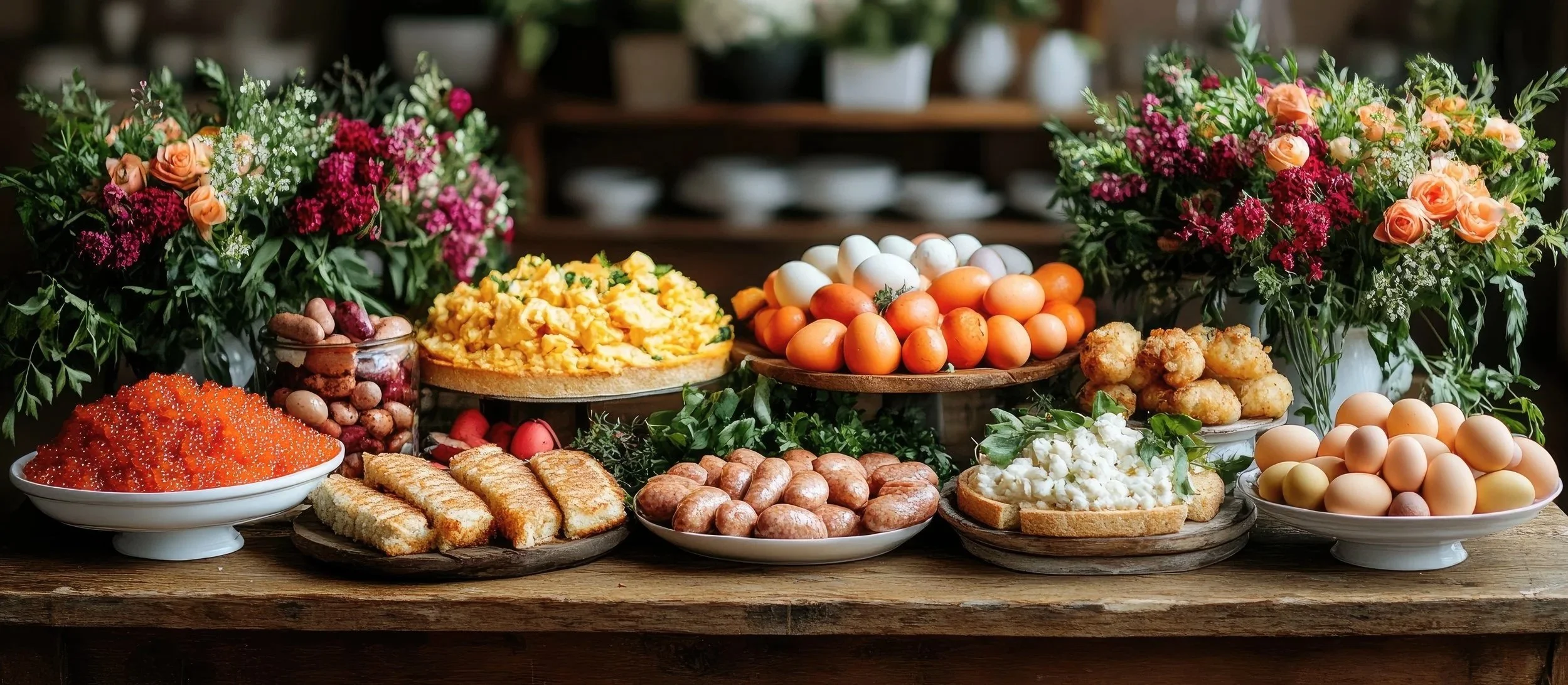
Each pop-up supper was for twelve people at £45 per person. Initially Anna hosted them at my friend's house in Islington, drawing on culinary traditions from across Eastern Europe - Georgian, Ukrainian, Estonian - with a particular inspiration from the Carpathians. Many of the same ingredients grow widely in Britain, which gave Anna a beautiful way of connecting the food of her homeland with the produce of her new one. Think Ottolenghi-style sharing platters with Eastern European flavours - vibrant dishes with lots of vegetables, served with elegance.
Word spread through my friend's network. An email to friends and contacts. People came, loved the food, and told others. Pop-ups led to catering for informal parties and gatherings, which led to larger bookings for seasonal events and weddings.
By the end of the year, Anna was running the equivalent of three pop-ups a week, with additional bookings on top - roughly £2,000 a week before the events and parties.
What Anna Built Beyond the Business
What I loved most about working with Anna was what she chose to do with the business beyond earning a living.
She created work opportunities for other displaced Ukrainian women, finding them through Ukrainian networks both in London and at home. These were women in similar situations to Anna - talented, displaced, needing both income and purpose. The pop-ups gave them both.
She established a giving model from the start. For every booking, her company funded a meal for someone experiencing food insecurity through a Ukrainian charity. Anna understood instinctively that building a business and giving back weren't separate activities. They were the same activity, expressed in different directions.
And she provided a taste of home to Ukrainian families in London. This might sound simple, but for people who have been displaced, the flavours you grew up with carry an emotional weight that's hard to overstate. A dish from the Carpathian mountains isn't just food. It's proof that your world still exists somewhere.
Anna's business was rooted in three purposes: preserving heritage, creating community, and giving back. From the very first pop-up, all three were present.
The Context That Makes This Matter
Anna's commitment to preserving Ukrainian culinary traditions carries a weight that most people in the UK don't fully appreciate.
During the Cold War, the Soviet regime systematically standardised what countries in the Communist Bloc ate, creating a uniform "Soviet cuisine" and effectively erasing the culinary distinctiveness of entire nations. Nearly all restaurants were replaced by identical government-run canteens serving indistinguishable menus from limited and often scarce produce. For the newly independent nations following the USSR's collapse, rediscovering their cuisines became an important part of reclaiming their identity. For Ukrainian women in particular, that meant turning to ingredients from the garden and the farmers' market and cooking them at home.
Anna's catering business is part of that ongoing act of cultural reclamation. The food of the "New East" - a term coined by the Calvert Journal, which championed the creative cultures of the former Soviet states until the foundation had to close in 2022 because of the restrictive political landscape in Russia - deserves to be known on its own terms. Not as "Eastern European" in the vague, undifferentiated way the West often uses the term, but as distinct, vibrant, and deeply rooted culinary traditions with their own stories and their own integrity.
Every meal Anna serves is a small act of cultural preservation.
Why This Story Matters
I've shared many case studies on this website founders positioning their businesses, building revenue streams, scaling strategically. Anna's story is different. The numbers matter, but they're not the point.
The point is what happens when someone who has lost everything discovers that the skills, the knowledge, and the traditions they carried with them are enough to build something new. That the act of cooking a meal for twelve people in an Islington kitchen can be an act of courage, an act of preservation, and an act of entrepreneurship - all at the same time.
Anna's journey was about transforming from someone who receives help to someone who shapes solutions. Being a refugee in the UK meant rediscovering agency - learning that even far from home, you can still build, support, and belong.
My role was to walk alongside her while she figured that out. To provide the strategic thinking and the practical support, certainly. But mostly to give her the space to make decisions about her future at her own pace, in her own way, without anyone else's timeline imposed on her.
That's what hope-centred strategy looks like in practice. Not a five-year plan. Not a growth target. A human being, rebuilding with courage, one pop-up supper at a time.
Anna now offers bespoke catering for all occasions, specialising in natural, organic, and seasonal food for private and corporate events - from sharing platters for corporate gatherings to wedding catering and intimate dinner parties. Her food draws on the culinary traditions of Eastern Europe, rooted in the Carpathian mountains and served with the elegance and generosity that has defined her cooking from the start.
If Anna's story resonates with you - whether you're rebuilding, starting something new in unfamiliar circumstances, or looking for a way to turn what you carry with you into something that serves others - I'd welcome a conversation. Book an exploratory call and let's explore what that looks like for you.
What Anna says…
"When I arrived in London, I didn't know if I was staying or going home. Denyse never rushed me to decide. She helped me focus on what I could do right now - the food I could cook, the people I could reach, the traditions I could keep alive. She gave me the space to make my own decisions and the confidence to trust them. By the end of our year together, I had a business, a team of Ukrainian women working alongside me, and something I hadn't expected to find so far from home: a sense of purpose."

WHAT’S NEXT FOR US?